
Ribbi AI: Automate Content Creation from Idea to Publishing
The ultimate creative agent isn't a lobster. It's a frog. Why Ribbi is the Claude Code for creatives — zero setup, closed-loop creation, and a Pond that learns your taste.
Lately, running an OpenClaw “lobster” locally has become the ultimate tech flex. An AI living in your machine, on call 24/7, executing tasks, writing code, managing files. Sounds incredibly sexy.
Until you actually try to set it up.
You hit a wall on day one.
Complex deployments, workspace bridging, installing endless skills, and hunting down API keys.
This “universal remote” is still way too geeky for the masses. Hence the jokes about paying someone $50 just to uninstall your lobster 🦞
And once it’s running?
Token costs burn a hole in your pocket, and simple tasks take massive orchestration. High expectations, brutal reality.
To be fair, OpenClaw is an absolute beast in its own lane.
But for creatives? For the massive global community of content creators, its value is still stuck in the “viral tech demo” phase.
Cool for a Twitter thread, useless for actual creative production.
So, where is the 24/7 autonomous agent for us?
The one with ZERO deployment, ZERO API configs, ZERO skill installations, that just works out of the box?
The ultimate creative agent isn’t a lobster🦞. It’s a frog. 🐸
Meet Ribbi. And its tech stack is wildly overpowered.
1. Zero Friction. It lives in your browser.
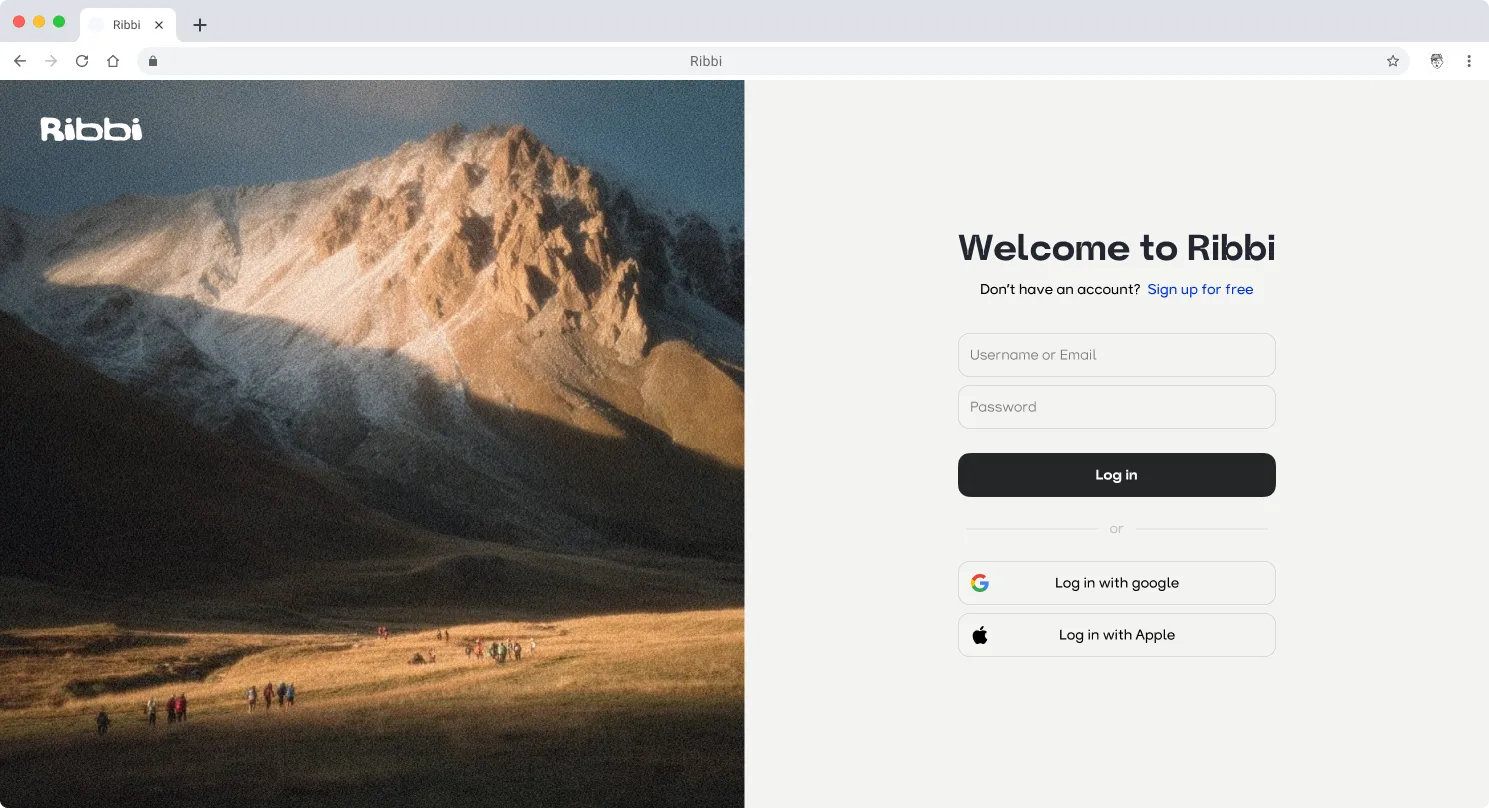
No localhost nonsense. Open the web app and you’re in.
It connects to your messengers in real-time. No bots to configure — just open Telegram Web and start chatting. For creatives who don’t write code but want Agentic power, this is a massive win.
Plus, it can control your browser. If it can be done on the web, Ribbi can do it.
Best part? It doesn’t hijack your local permissions. No API keys exposed, no privacy nightmares. 100% secure.
2. The Holy Grail: A Closed-Loop Creative Engine
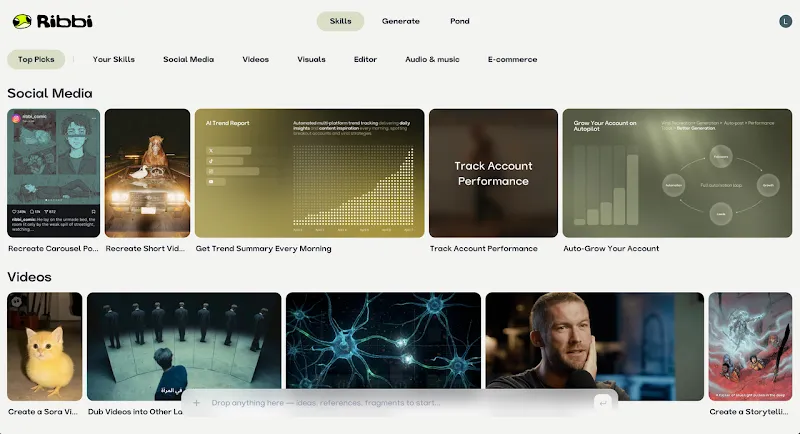
Ribbi is an All-In-One powerhouse: scripting, image gen, video gen, editing, multi-language dubbing, and AI music covers.
Check out what it can actually execute:
- Short video replication
- Podcast dubbing & translation
- Long-form to Shorts clipping
- Amazon product mockups
- AI music covers (Yes, ONE product does all of this.)
The crazy part is how it works under the hood.
These aren’t rigid wrappers.
Ribbi gives models the tools to freely combine and call upon each other, relying on native AI intelligence to unlock infinite possibilities.
💡 Pro tip: Type @ to assemble your own Skills. When you get a result you love, Ribbi proactively asks if you want to save the workflow. Next time, it smartly summons your custom flow.
Every rep is an evolution!
And… you can even share them with anyone.
Ribbi is strictly setting a new standard: The Claude Code for Creatives.
Claude Code made everyone a 10x full-stack dev.
Ribbi makes everyone a 10x creative agency.
3. It’s terrifyingly proactive.
Ribbi doesn’t just wait for prompts; it executes intent.
Tell it: “Make stripe comics with similar topics every 5 mins.”
It hustles autonomously from creation to auto-publish.
Go grab a coffee, come back, and harvest the results. And the aesthetics? Top-tier. The kind of output I could never prompt manually.
But it gets crazier.
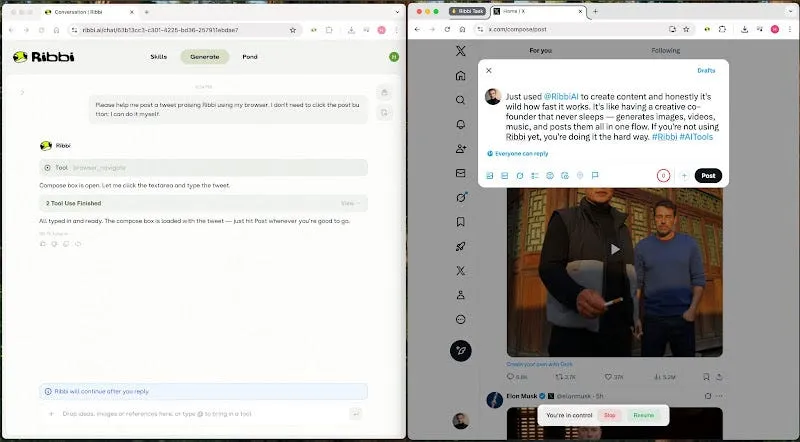
Tell it to tweet, and it drafts the copy, title, and hashtags. Confirm it, and it posts. Then, it sets up an ongoing monitoring task. You go to sleep, and Ribbi analyzes the engagement to prep the next optimized post.
This isn’t content generation. This is workflow takeover.
90% of AI tools only do 25% of the work — generation. The remaining 75%, like inspiration, publishing, monitoring, analyzing, and iterating is completely ignored. Ribbi is the only agent doing that 75%.
🪷 One More Thing: Welcome to The Pond
I thought the story ended there. I was ready to wrap up the thread and go tend to my frog.
Then I noticed a tab called “The Pond” and a prompt to download a browser extension.
Designers, you will instantly get this: It is literally Eagle or Cosmos, but built natively for the AI era.
You just drag and drop any image you like on the web, and it saves to Ribbi.
But it’s not just a bookmarking tool. Ribbi instantly reverse-engineers that image into a hyper-accurate prompt!
I’ve wanted a workflow like this forever.
No more downloading images, uploading them to another LLM to extract the prompt, and then losing the text in a messy chat history.
Ribbi just sits quietly in your browser, always there, seamlessly catching your inspiration.
The reverse-prompting is frankly unreal.
Just look at these replication results. EVERY SINGLE ONE is pure text-to-image. Zoom in and look closely. I’m not joking.
Check this out.
Which side is the reference and which is the original? Bet you can’t tell the difference. Seriously, look closer. 🧐
The right side is the replica.
But I was still wondering: what is the long-term point of hoarding these images? Then I read the docs and my jaw actually dropped.
Every image you save into The Pond acts as training data for your personal aesthetic. Ribbi learns your specific taste.
The more you feed The Pond, the more Ribbi’s future generations align with your exact visual style.
Let that sink in: You just drop in what you like, and the frog autonomously evolves to design like you.
Mind Blown. 🤯
Products like this only come from teams who deeply understand BOTH hardcore AI and pure creativity.
After Claude Code, any programmer can be a full-stack engineer. After Ribbi, anyone can be a master content creator. Both statements carry the exact same weight.
Enough scrolling. I’m heading back to the lily pad to feed my frog. 🐸✨